The Pacific Northwest brings lush green landscapes, reliable rainfall, and mild temperatures, but it also demands a landscaping approach that works with the climate, not against it. Homeowners here face persistent moisture, slugs, shade from mature trees, and short growing seasons, which means high-maintenance lawns and fussy perennials often become money pits. Low-maintenance Pacific Northwest front yard landscaping isn’t about giving up on curb appeal: it’s about choosing plants, hardscapes, and systems that thrive naturally in this region while cutting back on weeding, pruning, and constant fussing. This guide covers seven practical strategies to build a front yard that looks polished year-round without demanding weekend labor.
Table of Contents
ToggleKey Takeaways
- Low-maintenance Pacific Northwest front yard landscaping succeeds by choosing shade-adapted native plants and improving drainage rather than fighting the region’s cool, wet climate.
- Native shade-tolerant plants like sword fern, Oregon grape, and kinnikinnick outcompete weeds naturally and require minimal care once established, making them superior to imported ornamentals.
- A balanced hardscape mix of 40-50% patios, pathways, and mulched beds combined with 50-60% planted areas dramatically reduces weeding and ongoing labor while creating visual structure.
- Smart drainage through French drains, dry wells, and raised beds prevents root rot and fungal diseases caused by poor water management in clay-heavy Pacific Northwest soils.
- Apply 2-3 inches of mulch in a ring (not mound) around plants to suppress weeds, regulate moisture, and improve soil quality while requiring only seasonal refresh layers.
- Seasonal tasks taking 3-4 hours per quarter—such as spring mulch refresh, summer weeding after rain, and fall cleanup—maintain year-round curb appeal without weekend labor demands.
Why Pacific Northwest Climate Demands Low-Maintenance Landscaping
The Pacific Northwest’s cool, wet climate creates specific challenges that standard landscaping guides often ignore. Excessive moisture leads to root rot, fungal issues, and rapid growth in some plants while stunting others. Native species evolved in these conditions: imported ornamentals often struggle, requiring constant intervention, more fertilizer, pruning, and disease management.
Heavy shade from Douglas firs and western red cedars means sun-loving plants won’t thrive in most front yards here. Clay soils common to the region drain poorly, compounding moisture problems. Slugs, snails, and mites flourish in the damp conditions. Add Seattle’s infamous gray skies and short daylight hours, and you’re looking at a landscape that needs design tailored to reality, not aspirational Pinterest boards.
Building a low-maintenance front yard starts with accepting the climate rather than fighting it. That means ditching thirsty lawns, choosing shade-adapted plants, improving drainage, and designing hardscapes that reduce the total planting area. The result? A front yard that looks intentional and attractive while actually fitting the place where you live.
Native Plants That Thrive With Minimal Care
The Pacific Northwest’s cool, wet climate creates specific challenges that standard landscaping guides often ignore. Excessive moisture leads to root rot, fungal issues, and rapid growth in some plants while stunting others. Native species evolved in these conditions: imported ornamentals often struggle, requiring constant intervention, more fertilizer, pruning, and disease management.
Heavy shade from Douglas firs and western red cedars means sun-loving plants won’t thrive in most front yards here. Clay soils common to the region drain poorly, compounding moisture problems. Slugs, snails, and mites flourish in the damp conditions. Add Seattle’s infamous gray skies and short daylight hours, and you’re looking at a landscape that needs design tailored to reality, not aspirational Pinterest boards.
Building a low-maintenance front yard starts with accepting the climate rather than fighting it. That means ditching thirsty lawns, choosing shade-adapted plants, improving drainage, and designing hardscapes that reduce the total planting area. The result? A front yard that looks intentional and attractive while actually fitting the place where you live.
Shade-Tolerant Groundcovers And Shrubs
Most Pacific Northwest front yards sit in dappled or full shade. This rules out typical sun-garden plants but opens up rich options for shade-loving groundcovers and shrubs.
Sword fern (Polystichum munitum) is nearly indestructible in shade, thriving in dry or moist soil with minimal care. Oregon grape (Mahonia aquifolium) offers fragrant yellow flowers in spring, blue berries in summer, and bronze winter foliage. Kinnikinnick (Arctostaphylos uva-ursi) spreads as a low groundcover and handles sandy, gravelly soils where little else grows. Heuchera (coral bells) native varieties add textured foliage in purples and greens without demanding full sun.
For taller shade plants, Pacific dogwood (Cornus nuttallii) is a native small tree with layered white bracts (not true flowers) and reliable fall color. Vine maple (Acer circinatum) fits smaller spaces and glows red-orange in autumn. Pacific wax myrtle (Myrica californica) provides screening and semi-evergreen privacy.
These plants outcompete weeds naturally once established and rarely need supplemental watering beyond the first year. They’re also far more resistant to slugs and fungal issues than shade-garden standby imports like hostas or astilbe, which often struggle in the Pacific Northwest’s persistent dampness.
Hardscape Elements That Reduce Maintenance
Hardscaping, patios, pathways, retaining walls, and rock features, removes planting area, eliminates weeds, and creates visual structure without demanding ongoing care. In a low-maintenance front yard, hardscaping does the heavy lifting.
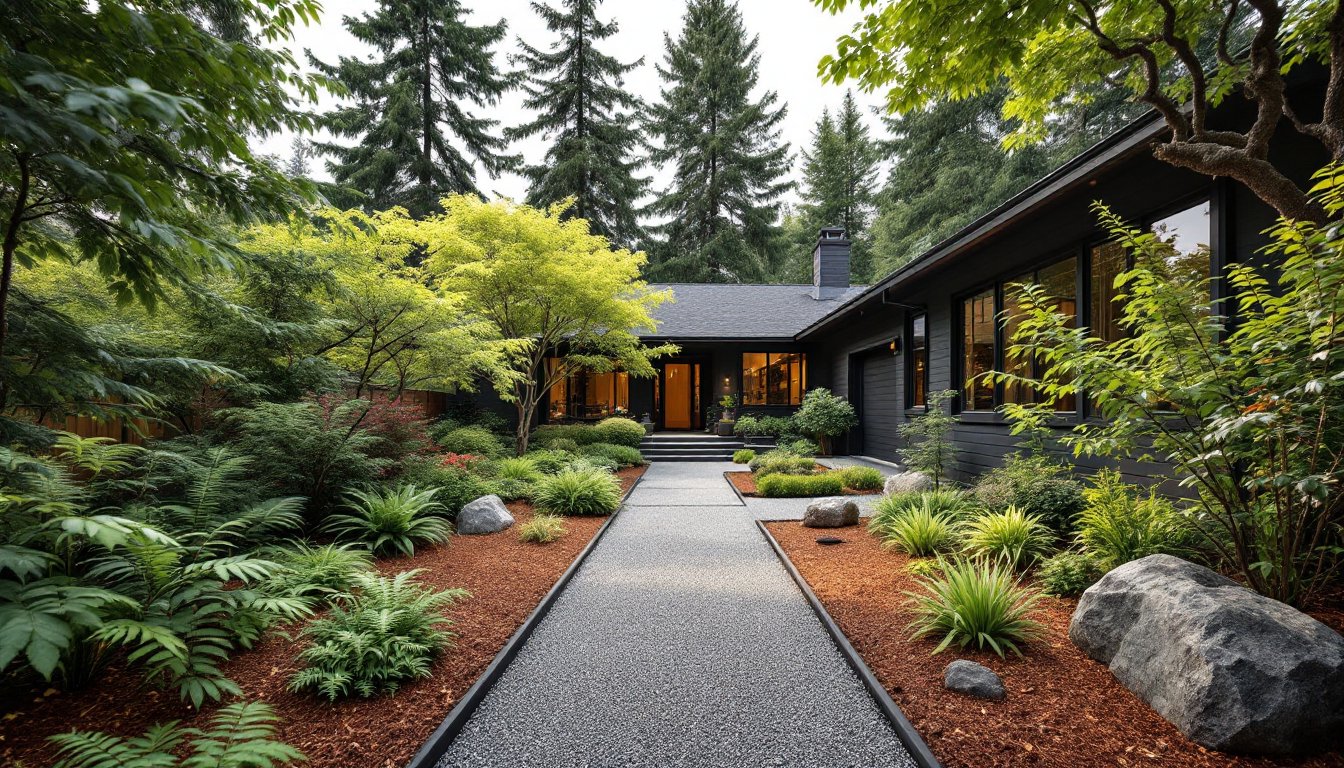
Permeable paving (recycled asphalt, gravel, or porous concrete pavers) works better than traditional asphalt or solid concrete in the Pacific Northwest’s heavy rains. It allows water to percolate through rather than pooling on the surface, which reduces flooding risk and algae growth. Gravel pathways soften hardscape edges and blend naturally with a planted landscape. Retain edges with steel or composite edging to reduce maintenance creep.
Retaining walls built from wood, stone, or composite materials can terrrace sloped yards and reduce erosion, a common problem in Pacific Northwest yards after heavy rain. If a slope‘s steeper than a 3:1 ratio (3 units horizontal for every 1 unit vertical rise), walls higher than 4 feet typically require a building permit and professional design. Check local codes before breaking ground.
Rock features, boulders, river stones, or decorative gravel beds, add visual interest and require zero maintenance once installed. Large stones anchor a design and soften the transition between planted areas and hardscape.
The goal is a balanced mix: perhaps 40-50% hardscape (patio, paths, planting beds with mulch) and 50-60% planted areas. This ratio dramatically reduces mowing, weeding, and overall labor while creating a cleaner, more intentional look than wall-to-wall plantings.
Smart Irrigation And Drainage Solutions
Ironically, the Pacific Northwest’s abundant rainfall often masks poor drainage problems. Water sits in clay soils, encouraging root rot and fungal diseases. Smarter drainage design is the first step: irrigation systems rarely need to run here outside summer.
French drains or perforated drainage pipes (typically 4-inch perforated PVC or corugated plastic) direct subsurface water away from planting beds and downslope. They’re especially critical if your front yard slopes toward the house foundation. Lay drain pipe 12-18 inches deep, sloped at a minimum 1% grade (roughly 1 inch drop per 100 linear feet), and backfill with gravel and landscape fabric to prevent soil clogging.
Dry wells, sunken gravel-filled pits, capture runoff from downspouts and let it percolate slowly into the soil. Most building codes permit a dry well 10 feet or more away from the foundation: check local rules before installing.
Raised planting beds improve drainage where native soils are especially heavy. A 12-inch raised bed filled with a mix of topsoil, compost, and coarse sand gives plants the drainage they need without constant supplemental water.
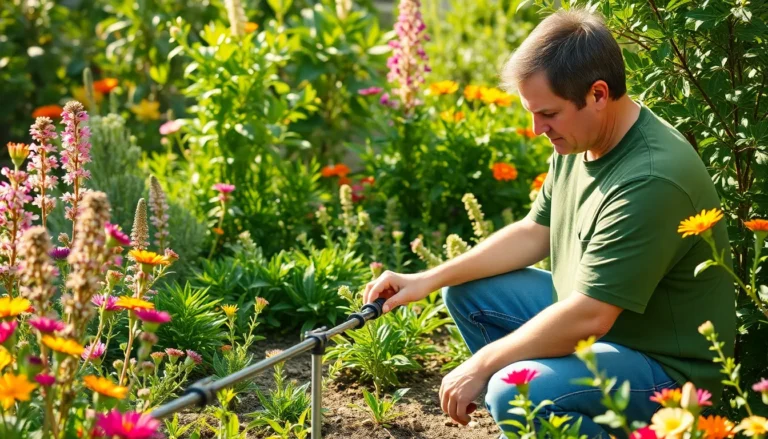
When irrigation is needed (typically June through early September), a drip system or soaker hose on a timer is far more efficient than spray irrigation. It delivers water directly to plant roots, reducing evaporation and fungal leaf disease. A rain sensor on the timer ensures the system shuts off during the region’s frequent rain. This approach cuts water waste and plant stress compared to overhead sprinklers.
Mulch Strategies For Pacific Northwest Gardens
Mulch is critical in the Pacific Northwest, it regulates moisture (vital since the region alternates between wet and dry seasons), suppresses weeds, moderates soil temperature, and gradually breaks down to improve soil structure and drainage.
Depth matters. Most native plants prefer 2-3 inches of mulch: 4 inches can trap moisture around the stem and invite rot. Keep mulch 4-6 inches away from tree and shrub trunks to prevent collar rot. Thinner mulch (1-2 inches) works in dense shade where moss naturally takes over.
Mulch type affects performance. Bark chips (Douglas fir or cedar bark) break down slowly, look natural, and work well under shrubs and in perennial beds. Compost enriches soil as it decomposes but breaks down quickly (12-18 months): use it under shorter-lived plantings or refresh it annually. Wood fiber or shredded bark breaks down faster than chips and works in tighter spaces. Avoid dyed bark mulch, the colorants offer no benefit and aren’t necessary.
Avoid mulch volcano: the mound of mulch piled against the trunk that gardeners often create. It traps moisture, invites pests, and can girdle trunks. Mulch should be a ring, not a mound.
In a low-maintenance yard, apply mulch 2-3 inches deep across all planting beds. Refresh annually by adding a thin layer (½-1 inch). This retains moisture, suppresses weeds, and gradually builds soil quality, reducing the need for supplemental watering and fertilizers over time. Unlike decorative rocks (which shed and require periodic raking), mulch actively improves the garden.
Seasonal Care Tips For Year-Round Appeal
Even a low-maintenance front yard benefits from seasonal attention. A few strategic tasks keep the landscape looking polished without demanding constant labor.
Spring: Refresh mulch in planting beds (add ½-1 inch) and cut back dead growth from perennials and grasses. Trim any winter-damaged branches from shrubs. This is also the time to divide overgrown groundcovers if needed. Most native plants don’t need heavy pruning, a light trim maintains shape without excessive regrowth.
Summer: Water new plantings (first year) if the region enters a dry spell lasting more than two weeks without rain. Established plants rarely need supplemental water except in drought years. Deadhead spent flowers on Oregon grape and currants if you want to extend bloom. Weeding is easiest after rain when soil is soft: most weeds pull cleanly without tools.
Fall: Cut back ornamental grasses and dead perennials in late fall (around October-November). Leave sword ferns and evergreen groundcovers intact, they provide winter interest and shelter. Remove fallen leaves from pavers and hardscape to prevent algae buildup. This is a natural time to add compost or mulch.
Winter: Slope cuts in hardscapes and raised beds to shed water, reducing ice buildup. Prune any branches hanging over walkways. Most Pacific Northwest plants are dormant and require almost no attention, use this season to plan spring improvements or rest.
Regular seasonal tasks take 3-4 hours per quarter for a typical residential front yard. That’s far less than weekly lawn mowing or constant pest management. The payoff is a landscape that looks intentional, supports local ecology, and requires minimal fussing year-round. Whether you’re starting fresh or retrofitting an existing yard, building with the region’s climate and using plants suited to shade and moisture turns a constant battle into a low-stress outdoor space that you can actually enjoy.