Lavender transforms a front yard from ordinary to unforgettable. These fragrant purple blooms aren’t just beautiful, they’re tough, low-maintenance plants that thrive in poor soil where other landscaping staples struggle. Whether you’re looking to boost curb appeal, create a pollinator haven, or simply enjoy the soothing scent every time you leave home, front yard lavender landscaping delivers results without demanding constant fussing. This guide walks you through selecting the right variety for your climate, preparing soil properly, and designing a lavender landscape that looks intentional and thrives for years.
Table of Contents
ToggleKey Takeaways
- Front yard lavender landscaping creates low-maintenance, drought-tolerant beauty while attracting pollinators and providing year-round visual interest with silvery-green foliage.
- Select the right lavender variety for your climate: English lavender for USDA zones 4–10, or Spanish and French varieties for warmer zones 8–10 where heat tolerance matters.
- Ensure proper drainage before planting lavender by amending heavy soil with sand or perlite at a 1:1 ratio and spacing plants 18–24 inches apart to prevent root rot.
- Water established lavender sparingly—only during dry spells lasting 2+ weeks—and provide 6–8 hours of direct sunlight daily to maximize blooms and plant health.
- Design lavender landscapes with mass plantings for dramatic impact, mixed perennial borders for extended interest, or edging along pathways to create fragrant, defined spaces.
Why Lavender Is Perfect For Your Front Yard
Lavender belongs in your front yard because it solves real landscaping problems. Most homeowners struggle with plants that either demand constant watering or look scraggly in poor soil, lavender does neither. Once established, these plants shrug off drought, requiring little supplemental water beyond natural rainfall. They’re deer and rabbit resistant, so wildlife won’t demolish your investment overnight.
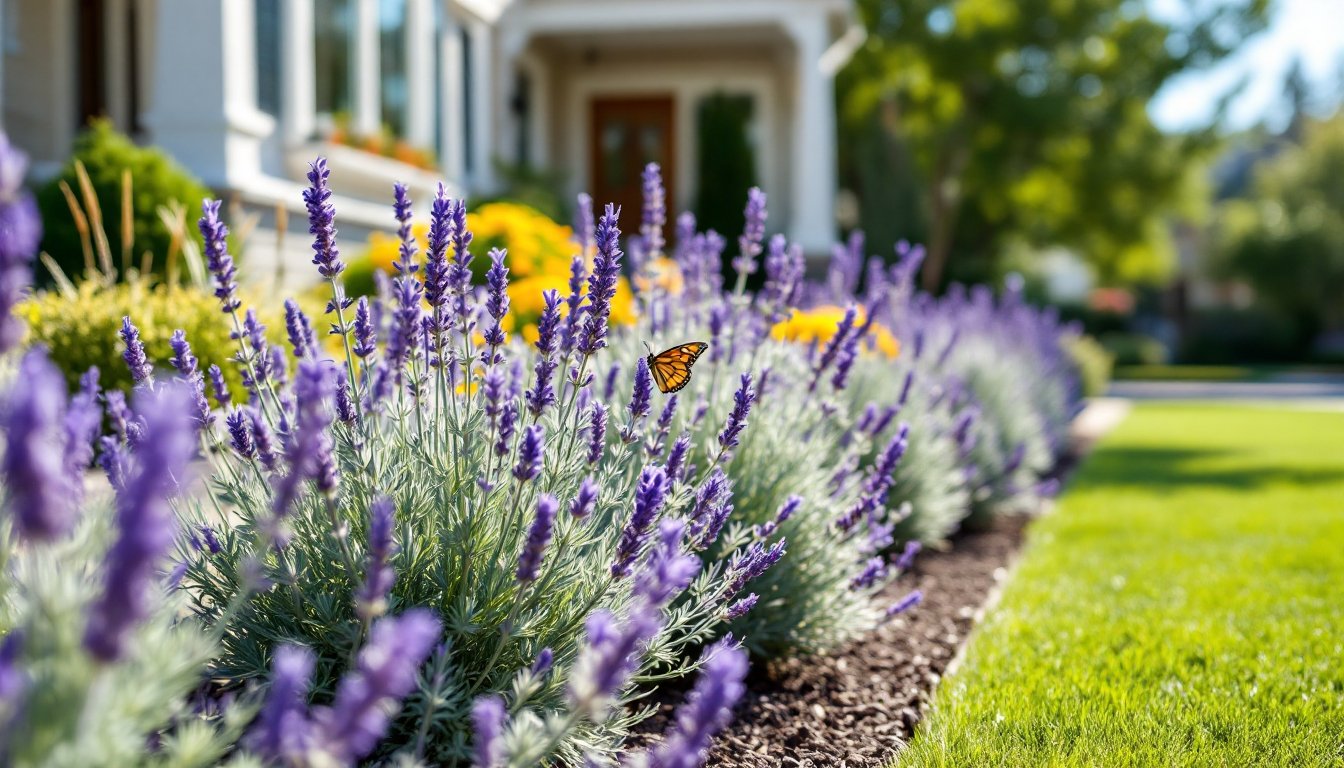
From a design standpoint, lavender works year-round. Purple blooms peak in summer but the silvery-green foliage persists through winter, providing structure and visual interest when everything else has died back. Unlike annuals that vanish after frost, lavender is a perennial that returns stronger each season. It also attracts pollinators, bees and butterflies flock to those purple spikes, making your front yard an active, living landscape rather than a static backdrop.
The fragrance is the cherry on top. As people pass your home or you step outside, that distinctive lavender scent hits immediately. It’s one of those small touches that elevates a property’s presence. When combined with front yard landscaping best practices like clean mulch lines and complementary plantings, lavender becomes a signature feature that neighbors notice.
Choosing The Right Lavender Variety For Your Climate
Not all lavender is created equal. The three main types, English, Spanish, and French, have different hardiness ranges and growing requirements. Picking the wrong type for your zone means watching your investment decline or fail outright.
English Lavender For Cool Regions
English lavender (Lavandula angustifolia) is the cold-hardy workhorse. If you live anywhere from USDA zones 4–10, this is your go-to. It survives temperatures down to –15°F and thrives in cooler climates with regular moisture during growing season. Common varieties include ‘Munstead’ (compact, matures 18–24 inches), ‘Hidcote’ (deep purple, reaches 24 inches), and ‘Grosso’ (longer flower spikes, ideal for cutting).
English lavender prefers cooler nights and doesn’t love intense summer heat. In hot southern climates, it often struggles or needs afternoon shade. That said, if you’re in a zone 4–6 area, English lavender is virtually foolproof. It’ll bloom reliably from June through August and reward you with year-round foliage.
Spanish And French Lavender For Warm Areas
Spanish lavender (Lavandula stoechas) and French lavender (Lavandula dentata) are heat lovers, hardy to zones 8–10. Spanish varieties like ‘Anouk’ handle 95–105°F temperatures without complaint. French lavender is even more heat-tolerant and blooms almost continuously in warm climates, a genuine advantage if you want color from spring through fall.
Spanish and French types are less winter-hardy, so they’re not suitable for northern zones. But, in warm climates, they’ll outperform English lavender by a mile. The downside is a slightly less intense fragrance and fewer classic purple options (Spanish types often display unique colors with prominent bracts, while French lavender has notched foliage).
When shopping, check hardiness zones on the nursery tag. Don’t guess, ask your local extension office or garden center which lavender thrives in your specific area. Planting the wrong type wastes money and frustration.
Planting And Soil Preparation For Success
This is where most DIYers stumble. Lavender doesn’t want rich, moist garden soil. It wants well-draining, lean conditions that resemble its native Mediterranean habitat. If your soil holds water, your lavender will rot.
Before planting, test your soil or at minimum get a feel for drainage. Dig a hole roughly 12 inches deep, fill it with water, and observe how fast it drains. If water still sits after 4 hours, you have a drainage problem. Lavender cannot tolerate standing water: it’ll develop root rot within weeks.
Amend heavy clay or compacted soil by mixing in coarse sand, perlite, or pumice at a 1:1 ratio with existing soil. The goal is creating a loose, crumbly texture. You can also build a raised bed 4–6 inches high filled with quality drainage mix. This is the safest approach if your native soil is dense.
When planting, dig a hole slightly wider than the root ball and just as deep, don’t bury the crown. Lavender plants hate sitting in moisture at their base. Space plants 18–24 inches apart depending on variety size. Fill the hole, tamp gently, and water once to settle soil. Then back off watering: most transplant failures happen because people coddle lavender with too much water.
Timing matters too. Plant in spring after frost danger passes or in early fall. This gives roots time to establish before extreme heat or cold. Avoid planting in late fall or winter when frost heaves can expose roots.
As you plan your layout, consider combining lavender with complementary drought-tolerant plants. Desert landscaping principles work beautifully here, pair lavender with Russian sage, catmint, or ornamental grasses for texture and movement.
Watering, Sunlight, And Maintenance Essentials
Once lavender is in the ground, the temptation is to water frequently. Resist it. Established plants need water only during extended dry spells (2+ weeks without rain). Overwatering is the number-one killer of otherwise healthy lavender.
For the first month after planting, water every 3–4 days if rainfall is scarce. Then taper off. By mid-summer, you’re watering maybe once every 2–3 weeks, only if the soil feels dry 2 inches down. Use a soaker hose or drip irrigation directed at soil level, don’t wet the foliage. Morning watering is ideal.
Lavender is a sun worshipper. Plant it where it receives 6–8 hours of direct sunlight daily. Morning sun is essential: afternoon shade helps in zones 8–10 but shouldn’t be necessary in cooler regions. Less sunlight means fewer blooms, weak growth, and increased disease risk.
Pruning keeps lavender compact and prevents woody, leggy plants. In early spring (as new growth emerges), cut back the plant by about one-third its height. This removes old, dead wood and encourages dense branching. Deadhead spent flowers throughout summer to prolong blooming. In fall, trim lightly to shape, but don’t cut into old wood, lavender doesn’t regenerate from bare wood like some shrubs do.
Fertilizer is optional. Lavender actually prefers poor soil and doesn’t need feeding. If you insist on fertilizing, use a light balanced formula in spring only, too much nitrogen produces leafy plants with fewer flowers.
For specific design inspiration and planting combinations, outdoor landscaping resources offer layering techniques that showcase lavender alongside complementary textures and colors.
Design Ideas To Maximize Your Lavender Landscape
Lavender works in several design contexts. A mass planting of a single variety creates dramatic impact, imagine a 3×6 foot bed of ‘Hidcote’ English lavender as a foundation border. The purple color, fragrance, and consistent texture make a statement without feeling busy.
You can also layer lavender into a mixed perennial border. Pair it with silvery-foliaged plants like dusty miller or artemisia, add coral-colored blanket flower, and include white or cream bloomers like salvia or Russian sage. This approach creates richer visual interest and extends the blooming season beyond lavender’s summer peak.
For a formal aesthetic, topiary lavender or standards (single-stemmed, rounded top) work in pairs flanking an entryway. Spanish varieties are easier to train into this shape. Place them in decorative containers with drainage holes filled with cactus mix for extra drainage insurance.
Lavender also suits cottage-style and Mediterranean schemes. Pair it with gravel mulch, ornamental grasses, and drought-tolerant perennials. The combination feels intentional and sophisticated without high maintenance.
Edging is another smart use. A single row of ‘Munstead’ lavender along a driveway or pathway defines space and releases fragrance as people brush past. The silvery foliage also brightens dark edges and creates visual separation.
If you’re drawn to a more comprehensive landscape overhaul, slope landscaping techniques can incorporate lavender on hillsides, where drainage is naturally excellent and the plants’ drought tolerance becomes a real asset. For visual planning, platforms like Houzz allow homeowners to browse Houzz design galleries and test color combinations before committing to plant purchases.
For regional plant pairing advice and deeper design strategies, Gardenista’s field guide to lavender provides professional planting and styling insights. Also, Country Living frequently features lavender projects in farmhouse and rustic home designs, offering aesthetic inspiration beyond typical landscaping blogs.