Gardenias deliver something most landscaping plants can’t: knockout fragrance paired with glossy, elegant foliage and pristine white blooms. They’re the kind of shrub that stops visitors in their tracks. Whether you’re aiming for a sophisticated formal garden or a more relaxed cottage aesthetic, gardenias work harder than almost any other plant to elevate curb appeal. The challenge isn’t finding reasons to plant them, it’s getting them to thrive in your specific climate and conditions. This guide walks through everything you need to know to design, plant, and maintain gardenias in your front yard, from choosing heat-tolerant varieties to solving common drainage problems that kill these beauties faster than frost.
Table of Contents
ToggleKey Takeaways
- Gardenia front yard landscaping succeeds by choosing the right cold-hardy variety for your USDA zone—’Veitchii’ for zones 8–11, and ‘Kleim’s Hardy’ for zones 7 and below.
- Acidic soil (pH 5.0–6.0) and excellent drainage are non-negotiable for gardenia survival; raised beds with imported soil offer a faster, more reliable solution than ongoing soil amendments.
- Position gardenias 4–6 feet from the house as specimen plants or in asymmetrical groupings with evergreen companions to create focal points that look intentional year-round.
- Consistent watering, morning soaking, and proper mulch application with a 4–6 inch air gap around the stem prevent bud drop and fungal diseases that commonly plague gardenias.
- Light pruning immediately after flowering (April–June) preserves next year’s blooms, while proper spacing of 3–4 feet between plants ensures air circulation and minimizes pest and mildew issues.
Choosing The Right Gardenia Varieties For Your Climate
Not all gardenias tolerate cold equally, and this matters more than most gardeners realize. The most common cultivar, Gardenia jasminoides ‘Veitchii’ (also called the Southern Gardenia), handles temperatures down to about 15°F before suffering damage. If you live in USDA zones 8 through 11, this is your standard choice. For colder zones (7 and below), ‘Kleim’s Hardy’ reaches further north and tolerates dips to around 5°F, though it produces slightly smaller flowers.
If you’re in zones 9–11 with hot summers and plenty of humidity, the ‘Radicans’ cultivar stays compact (3–4 feet) and blooms prolifically without sprawling. ‘Jubilation’ is another compact option gaining popularity, naturally rounded, fragrant, and less prone to powdery mildew than older varieties.
Before buying, confirm which zone your neighborhood actually sits in. Microclimates matter: a south-facing slope stays warmer, while a north-facing lot or one near pavement that reflects heat can swing conditions dramatically. Ask local nurseries which gardenias thrive in your area rather than relying on plant tags alone. Locally-sourced stock also means your plants are already acclimated to regional humidity and soil profiles.
Design Layouts For Gardenia-Focused Front Yards
Gardenias work best when given breathing room. A single shrub planted as a specimen (standing alone) draws the eye and fills a space with fragrance without overcrowding the entrance. Aim to plant mature specimens 4–6 feet from the house or walkway, depending on the cultivar’s full size. This prevents moisture problems (gardenias dislike constant spray from sprinklers aimed at the foundation) and lets you enjoy the scent as you approach.
For larger front yards, a trio of gardenias staggered at varying depths creates depth and softens hard edges. Plant them in an asymmetrical triangle rather than a straight row, it feels intentional, not like a hedge that got cut. Gardenias sit at home alongside hydrangeas, azaleas, and camellias (all acid-loving shrubs with similar cultivation needs), making a mixed shrub border practical.
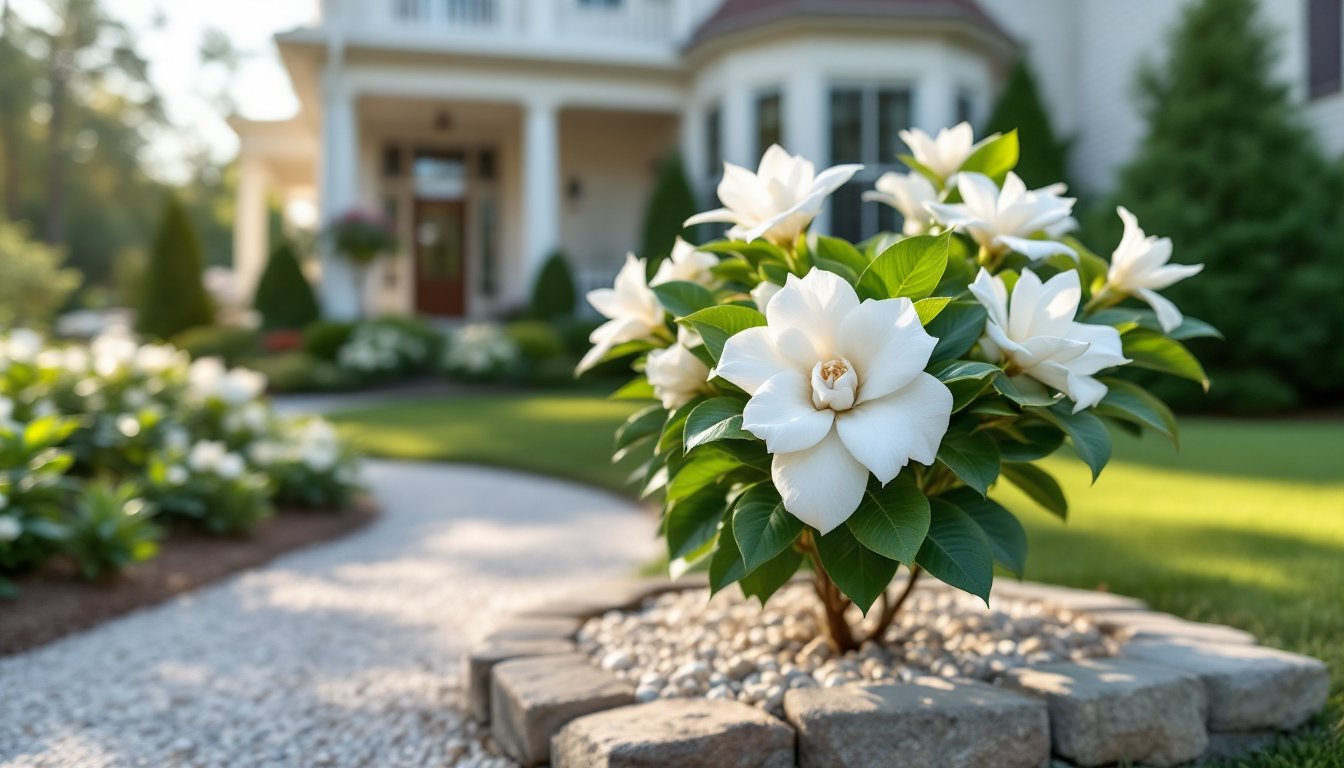
Edging matters too. A 4–6 inch hardscape border (stone, brick, or metal edging) around plantings keeps lawn grass from creeping in and simplifies mulching. Gardenias appreciate mulch but hate having it piled against the stem, the air gap prevents stem rot.
Creating Focal Points With Gardenias
Gardenias shine as focal points because of their seasonal flower display and year-round glossy foliage. Position one at the corner where two garden beds meet, or plant one to frame the entry gate or front door. Pair a gardenia with lower-growing evergreen companions, Japanese boxwood, dwarf ilex, or soft-textured fatsia, to anchor the design vertically and horizontally. This prevents the gardenia from looking isolated, especially in winter when flowers fade. When planning a focal point, visualize the space during your region’s dormant season and ensure the evergreen structure still reads as intentional.
Companion Plants And Complementary Landscaping
Gardenias pair beautifully with plants that share their love of acidic, well-draining soil. Hostas, astilbes, ferns, and hellebores love the partial shade underneath a mature gardenia’s canopy. If you’re layering beds, Japanese pieris and blooming forsythia extend the flowering season before and after gardenia blooms peak (usually April through June in warmer zones).
Hardscaping complements gardenias wonderfully. A simple raised bed or stone border frames the planting and defines space without competing. Light-colored stone, limestone, pale gravel, or white mulch, echoes the blooms and adds visual contrast. Avoid dark materials that absorb heat: gardenias prefer cool, moist root zones.
For underplanting, think groundcovers: Ajuga, creeping thyme, and mondo grass stay low, suppress weeds, and let the gardenia’s form take center stage. Avoid planting aggressive spreaders like vinca or ivy that’ll choke the shrub’s base. The front yard is often your highest-traffic zone, so choose companions that tolerate occasional foot traffic and won’t create a tangled mess that hides the gardenia’s elegant silhouette. Many homeowners transforming their yards with Front Yard Landscaping Secrets find that pairing gardenias with architectural plants (ornamental grasses, structured shrubs) creates polished, intentional designs.
Soil Preparation And Planting Best Practices
Gardenia soil prep isn’t optional, it’s the difference between a thriving shrub and one that struggles for years. Gardenias demand acidic soil (pH 5.0–6.0). If your soil is neutral or alkaline, amending once at planting won’t stick. Test your soil beforehand with an inexpensive kit or through your local cooperative extension. If pH is above 6.0, you have two choices: grow gardenias in raised beds with imported acidic soil, or commit to annual sulfur applications to lower pH over time. The raised bed route is faster and more reliable.
Drainage is non-negotiable. Gardenias rot in standing water. If your site has clay-heavy or poorly draining soil, add a 2–3 inch layer of peat moss or aged compost worked into the top 8–10 inches of native soil. This improves both acidity and drainage simultaneously. Coarse peat moss also aerates compacted ground, letting roots establish without restriction.
Planting depth matters: the top of the root ball should sit at or slightly above grade, never buried. Backfill with amended soil, water thoroughly to settle it, and apply a 3–4 inch mulch ring around the base, but leave 4–6 inches clear around the stem. This gap prevents moisture from sitting against bark and inviting fungal issues.
Spring planting (after the last frost date in your zone) lets gardenias establish through summer moisture before fall dormancy. Fall planting works in warm zones but risks establishing roots before winter cold stresses them. When undertaking comprehensive Outdoor Landscaping projects, timing planting with your local growing season ensures better survival rates than fighting climate headwinds.
Maintenance Tips For Healthy, Blooming Gardenias
Gardenias are not low-maintenance shrubs, but the payoff is worth the attention. Watering consistency is critical. Keep soil evenly moist (not soggy) from spring through fall. Inconsistent watering, soggy one week, dry the next, triggers bud drop before flowers open. Morning soaking beats frequent light sprinkling. Mulch helps regulate moisture, but remember that air-gap rule.
Pruning happens after flowering ends. Remove crossed branches, dead wood, and any growth taller than your design calls for. Gardenias set next year’s flower buds in summer, so heavy pruning in late August forward will cut away blooms. Light shaping immediately after flowering doesn’t harm bud development.
Feeding matters in acidic soils. In spring, apply an azalea-formulated fertilizer (higher in iron) to support the nutrient profile acidic soils naturally encourage. Over-feeding pushes foliage over flowers. A single spring application is usually sufficient. If leaves yellow even though adequate acidity, suspect iron deficiency, an iron chelate spray or granule fixes this within weeks.
Pests are minimal in most climates. Whiteflies and spider mites prefer hot, dry conditions, proper irrigation and air circulation (don’t crowd plants) prevent infestations. Powdery mildew appears in humid stagnant air. Ensure at least 3–4 feet between plants for air movement. If fungal issues crop up, neem oil or sulfur sprays work for gardenias, though prevention through spacing beats repeated spraying. Reference horticultural guides for region-specific pest profiles before your growing season starts. In freezing climates, late-season deep watering before hard frost hardens plants, and a burlap wrap protects young plantings from winter burn.
Conclusion
Gardenias transform front yards from forgettable to unforgettable, but only if you respect their specific needs. Match the right variety to your climate, prepare acidic, well-draining soil before planting, and commit to consistent watering. The payoff is a fragrant, elegant entrance that announces you care about your home’s appearance. Start with one specimen, master its care, and expand from there. Your neighbors will be asking where you got the secret to such stunning blooms.