Your front sidewalk is one of the first things visitors and passersby notice about your home. Thoughtful sidewalk landscaping doesn’t just improve curb appeal, it defines your outdoor space and sets the tone for the entire property. Whether you’re working with a narrow strip beside concrete or a generous border, the right combination of plants, hardscaping, and accessories can turn an overlooked area into a polished, welcoming entrance. This guide walks you through practical sidewalk landscaping ideas that work for different climates, budgets, and skill levels, so you can create a front yard that looks intentional and well-maintained.
Table of Contents
ToggleKey Takeaways
- Front yard sidewalk landscaping improves curb appeal by balancing aesthetics with function, using low-growing plants to maintain clear sightlines and choosing hardy species suited to salt spray and foot traffic.
- Select low-maintenance groundcovers like creeping sedums and liriope paired with seasonal flowering plants such as tulips and coneflowers to create year-round visual interest without constant upkeep.
- Install edging with a 3-inch mulch layer to contain your sidewalk landscaping design, prevent grass creep, and protect plant roots while maintaining a finished, intentional look.
- Layer plants by height and texture—groundcover in front, medium shrubs in the middle, and taller specimens in back—while maintaining a cohesive color scheme to create professional-looking borders.
- Enhance sidewalk landscaping with solar path lighting, uplighting on focal points, and minimal decorative accessories that match your home’s architectural style for added visual impact.
Design Principles For Sidewalk Landscaping
Before you buy a single plant or shovel, think about the bones of your design. A sidewalk landscape needs to balance aesthetics with function, people still need to walk through, and salt spray, foot traffic, and shade from your home can affect what thrives there.
Start with scale and proportion. Tall plants pressed against a narrow sidewalk look crammed: low-growing options create breathing room and keep sightlines open. Most landscapers recommend keeping border depth between 18 inches and 3 feet, depending on your sidewalk width. This gives you enough space for layering, typically a low groundcover in front, medium shrubs in the middle, and taller specimens in back if there’s room.
Consider traffic patterns and maintenance access. If your sidewalk is the main path to your front door, avoid sprawling plants or thorny species at knee height. Leave enough clearance so someone carrying groceries or pushing a stroller doesn’t have to duck or squeeze. Think about weather exposure too: sidewalks beside a road take more salt spray and runoff than sheltered border gardens. Hardier, more salt-tolerant plants belong there: delicate perennials might do better in a shaded corner.
Color and texture work best when they’re intentional. A single color scheme, say, white and silver with deep green foliage, feels cohesive and professional. If you want variety, choose a limited palette: perhaps soft pastels or jewel tones, not a rainbow that reads as chaotic. Texture matters equally: mix fine-leafed plants with bold structural forms. Ornamental grasses beside broad-leafed hostas, for example, create visual interest without clashing.
Plant Selection For Sidewalk Borders
The plants you choose set the success of your sidewalk garden. Unlike a shaded perennial border or a sunny annual bed, sidewalk landscapes face unique challenges: compacted soil, reflected heat from concrete, salt exposure, and often less-than-ideal light. Pick plants that can handle your conditions rather than fighting them.
Low-Maintenance Groundcover Options
Groundcovers are the workhorse of sidewalk landscaping. They suppress weeds, require minimal pruning, and create a finished, intentional look without demanding constant attention.
Creeping sedums (Sedum spurium, S. album) thrive in poor, well-draining soil and handle both sun and partial shade. They’re practically bullet-proof, especially in cold climates. Expect to pay $15–$30 per square foot installed, though starter plants run $3–$8 each if you’re plugging in small sections yourself.
Creeping phlox (Phlox subulata) blooms in spring with a carpet of pink, white, or purple flowers. It prefers sun and well-draining soil, and it spreads readily without becoming invasive. Plant it 12 inches apart in spring: it’ll fill in by midsummer.
Liriope (lilyturf) handles shade, compacted soil, and occasional foot traffic better than most plants. It’s evergreen in most zones, produces purple or white flower spikes in late summer, and costs around $5–$10 per plant. Space it 12–18 inches apart.
Ornamental grasses like mondo grass or dwarf fountain grass add movement and texture. Mondo grass is especially tough in compacted, shady spots beside sidewalks. A mature plant costs $8–$15: it’ll expand slowly but steadily over two or three seasons.
Flowering Plants For Year-Round Interest
Groundcovers alone can look flat. Layer in bulbs and perennials for seasonal pops of color without extra maintenance.
Spring bulbs, tulips, daffodils, and crocuses, go in the ground in fall and emerge before most perennials wake up. Plant clusters of 5–7 bulbs (12–15 inches apart) in late October through November, depending on your zone. Rodent-resistant options include daffodils and crocuses: squirrels and voles love tulips. Budget $1–$2 per bulb for quality stock.
Coral bells (Heuchera) offer colored foliage year-round in shades of burgundy, lime, or chocolate, plus delicate flower spikes in spring and early summer. They tolerate partial shade and poor soil better than most perennials. Expect to spend $8–$15 per plant.
Coneflowers (Echinacea) bloom from midsummer into fall with papery petals in purple, pink, or white. They’re tough, attract pollinators, and don’t mind reflected heat from concrete. Divide mature plants in spring every 3–4 years to rejuvenate them.
Salvia species range from dwarf (10 inches) to shoulder-height, with blue, purple, pink, or red flowers. Most tolerate heat and drought. Deadhead spent blooms to encourage more flowers. A young plant costs $6–$12: it’ll reach full size in one to two seasons.
When shopping, look for nursery tags that indicate hardiness for your USDA zone. A plant rated for Zone 5 won’t survive a Zone 3 winter, no matter how well you coddle it.
Hardscaping And Edging Solutions
Plants alone don’t define a sidewalk border. Hardscaping, pathways, edging, and structural elements, provides the frame that makes plantings look intentional and contained.
Edging is the first move. Without it, mulch spills into the sidewalk, and grass creeps into planting beds. Your options include:
• Metal edging (steel or aluminum, typically 1/8 inch thick, 4–6 inches tall) keeps a clean, modern look and lasts decades. Install it slightly above grade so mulch doesn’t wash over. Cost: $0.50–$1.50 per linear foot, plus labor.
• Composite or plastic edging is cheaper ($0.25–$0.50 per foot) but doesn’t age as gracefully. It can sag or crack in freeze-thaw cycles if not installed properly (edges must be fully buried or fully exposed to prevent buckling).
• Stone or brick creates a traditional, expensive look ($2–$5 per linear foot). Install on a 1-inch sand base to prevent settling. This option works beautifully if your sidewalk itself is stone or brick.
• No edging works if you maintain a clean line with an annual edger or sharp spade. It’s free but demands discipline, most homeowners end up wishing they’d installed edging.
Mulch or ground-level surfaces fill the planting bed. A 3-inch layer of shredded bark mulch suppresses weeds, insulates roots, and looks finished. Refresh it every 18 months or so as it breaks down. Budget $45–$60 per cubic yard delivered (covering roughly 100–120 square feet at 3 inches). Alternatives include wood chips (cheaper but longer to break down, giving a rougher look), shredded hardwood (finer, more polished appearance), or stone mulch (pricier but permanent and great for succulents and ornamental grasses, it reflects heat, though, so use it carefully in hot climates).
Hardscaping paths within or adjacent to your sidewalk border add dimension. Stepping stones or a narrow flagstone path ($3–$8 per square foot installed) suggest visitors can walk through the planting bed without crushing plants. Locally sourced stone or salvaged brick keeps costs lower and looks more authentic than uniform manufactured pavers.
Lighting And Accessory Ideas
Once your plantings are in place, lighting and small accessories draw attention to your design and extend the visual impact into evening hours.
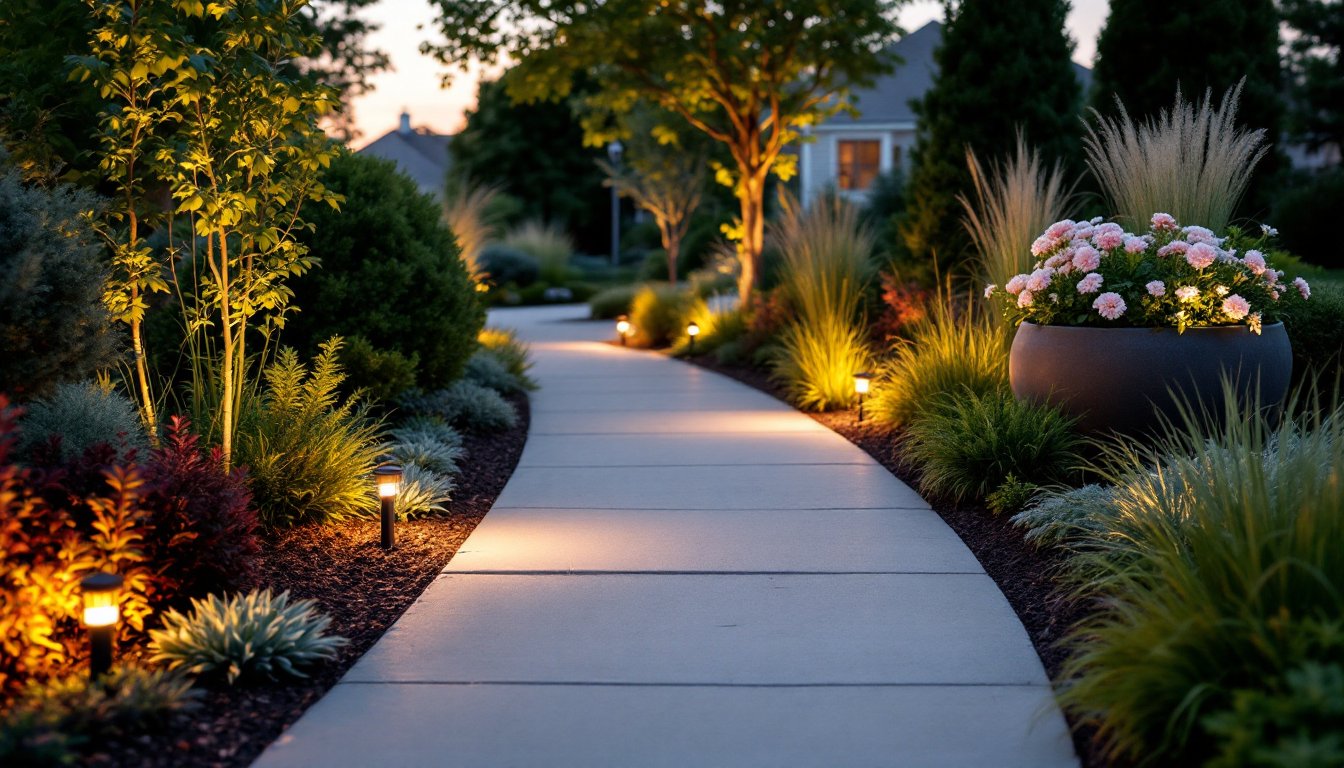
Path lighting is functional and beautiful. Solar LED path lights ($15–$40 each) need no wiring and cast a gentle glow without overpowering the space. Position them 3–4 feet apart along the sidewalk edge. For a more permanent installation, consider in-ground accent lights aimed at specimen plants or architectural features: these require burying low-voltage wire but create a more polished effect.
Uplighting on a focal point, a small tree, an evergreen shrub, or a decorative planter, adds drama without looking like a stadium. A single well-placed in-ground light does more than three mediocre ones scattered randomly.
Small decorative elements reinforce your design without clutter. A single large planter with a specimen plant or seasonal flowers draws the eye and marks the entry. Stone or concrete finials, small sculptures, or a house number marker on a post can anchor a design. Keep it simple: too many accessory items read as cluttered, not curated.
A small seating feature, even a stool or low bench, makes the entry feel intentional and welcoming. It signals to visitors that this space is part of your home, not just a path to bypass. Pair it with a lantern, decorative planter, or flowering vine on a small trellis for added dimension.
When choosing lighting and accessories, match your home’s architectural style. Modern minimalist houses look better with clean-lined LED path lights and simple stone or metal accents: traditional homes suit warm-toned lanterns, vintage reproductions, or rustic planters. Design tips and material ideas for front yard paths help you coordinate every element. Resources like The Spruce offer tested design guides, and Southern Living showcases regional design approaches that might inspire your own work.
Conclusion
Sidewalk landscaping transforms a utilitarian strip into an extension of your home’s personality and character. Start with a clear design concept, choose plants suited to your site’s light and soil, edge and mulch thoughtfully, and add lighting or accessories that reinforce your style. Most sidewalk projects deliver results within a single growing season. Even if you’re tackling this as a beginner, you have room to learn and adjust as plants establish. Begin small, measure twice, and give yourself permission to refine as you go.